Swimming pool leak testing: what your water level is telling you
Every pool loses some water. Sun, wind, and splash-out remove a measurable amount each day in a normal cycle. But when the water level drops more than usual week after week, something else is at work. The question is whether the cause is ordinary evaporation or something that needs attention. Frequent pool refilling is one of the clearest signals that a pool has an issue, yet many owners write it off as normal. Understanding what swimming pool leak testing involves and how it tells the difference between harmless water loss and a real leak can save both water and frustration.
How much water loss is normal
A swimming pool in good condition loses roughly a quarter of an inch to half an inch of water per day in warm weather. That number depends on local climate, pool surface temperature, and how much the pool is used. In cooler months or when the pool is covered, evaporation slows. An uncovered pool in direct sun loses more. Splash-out from swimmers adds a little on top of that. The key is knowing your pool's typical daily drop so you can spot when it changes.
Pool owners often mistake a small, steady drop for normal evaporation when in fact a plumbing or structural leak is present. The easiest way to check is a simple bucket test. Fill a bucket with pool water to about an inch from the rim, set it on the top step of the pool, and mark the water level inside the bucket. Mark the pool water level on the tile or skimmer face at the same time. After 24 hours of normal use without topping off, compare the two levels. If the pool lost more water than the bucket, something besides evaporation is pulling water out. That difference points toward a leak somewhere in the pool shell, the plumbing lines, or the filter system.
What frequent refilling actually costs
Water bills climb when a pool needs topping off every few days. Beyond the monthly cost, constantly adding fresh water changes the chemical balance. Chlorine, pH adjusters, and other treatments get diluted, so you end up using more chemicals to keep the water safe and clear. The extra effort and expense become a routine burden that many owners accept simply because they do not realize the water loss is not normal. Over a season, the wasted water and chemicals add up to a significant amount. More importantly, the underlying problem that causes the leak rarely fixes itself. A small crack or a loose fitting tends to get worse over time, especially when the ground shifts or temperatures change.
Another hidden cost is energy. A pump that runs with air in the system because of a suction-side leak wastes electricity. Heated pools that lose warm water force the heater to work harder to maintain temperature. The combination of higher utility bills and shortened equipment life makes frequent refilling a problem that deserves attention early.
Common places where pools leak
Leaks happen in three main areas: the pool structure, the plumbing, and the equipment pad. Each has its own signs and requires a different approach to diagnose.
- Structural cracks in the gunite, plaster, or liner can develop from ground movement, age, or poor installation. These often leak slowly at first and accelerate as the crack grows.
- Plumbing lines underground develop pinholes, loose joints, or breaks from tree roots or shifting soil. A leak in the return or suction line may not be visible at the pool itself but shows up as constant air bubbles at the returns or a drop in water level when the pump is off.
- Equipment leaks at the pump seal, filter o-ring, heater manifold, or valve gaskets are usually easy to spot because water drips or pools around the equipment pad. But small drips that evaporate quickly on a hot day can go unnoticed.
- Skimmer and light fixtures often develop leaks where they penetrate the pool shell. A cracked skimmer throat or a light niche that is not sealed lets water escape into the ground behind the pool shell.
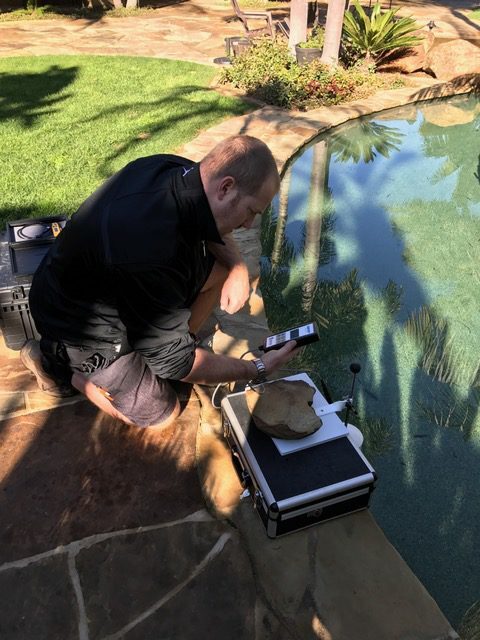
Each of these leaks produces a slightly different pattern of water loss. A professional leak detection service uses pressure testing, dye testing, and listening equipment to find the exact location without tearing up the deck or digging blindly.
When to suspect a leak versus evaporation
Even with the bucket test, some situations make it hard to tell. Heavy wind increases evaporation significantly. A pool with a dark surface absorbs more heat and loses more water to evaporation than a light-colored one. High humidity reduces evaporation, so a sudden change in weather can make a leak look like it stopped. The best time to measure is during a stretch of calm, similar weather with the pool uncovered and the pump running its normal cycle.
If you notice the water level dropping more than half an inch per day consistently, or if the drop speeds up when the pump is running and slows when it is off, the problem is likely in the plumbing. If the drop stays the same whether the pump is on or off, the leak is probably in the pool shell itself. These patterns help narrow the search before any digging or repair begins.
Why professional testing matters
Swimming pool leak testing is not always straightforward. A slow leak can be masked by rainfall or by topping off the pool every day. By the time the water bill becomes alarming, the leak may have already damaged the surrounding soil or undermined the deck. Detecting a leak early keeps the repair small and contained.
Professional leak detection uses methods that go beyond the bucket test. Pressure testing on the plumbing lines isolates whether the return or suction side has a break. Dye testing places a small amount of colored dye near a suspected crack or fitting so the water flow carries it into the leak, making it visible. Electronic listening devices pick up the sound of water escaping underground. These techniques pinpoint the problem without guesswork or unnecessary excavation.
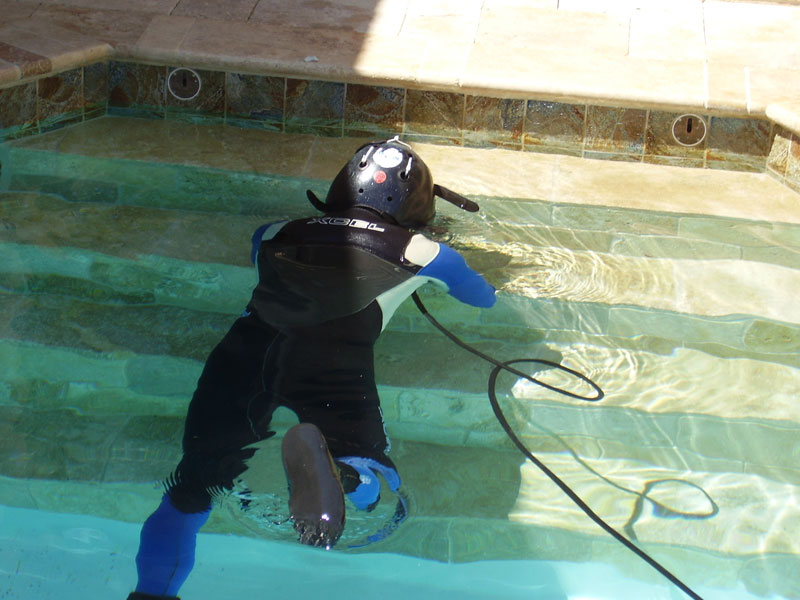
In San Diego, where pools are used year-round and water conservation is a practical concern, a pool that loses water unnecessarily is wasteful. Swim Care Pool Services provides specialized leak detection for residential and commercial swimming pools, spas, and related plumbing in the area. Their work focuses on finding the source of water loss so the right repair can be made the first time.
What happens if you ignore it
Letting a small leak continue usually leads to a larger problem. Water that escapes from a crack or a plumbing joint erodes the soil underneath the pool and the deck. Over time, this creates voids that can cause the pool shell to settle unevenly or the deck to crack and sink. A repair that might have been a simple patch or a re-plumbed section becomes a structural project involving excavation and rebar work.
The water itself does not stop leaking until the pressure equalizes, which usually means the water level drops below the leak point. In a pool with a crack in the side wall, the water will keep falling until it reaches the level of the crack, and then the exposed surface above the crack dries out and may worsen. In plumbing leaks, the water can continue to escape even when the pump is off, depending on where the break sits relative to the water level.
There is also the health aspect. Stagnant water that collects in the ground around a leak can become a breeding site for mosquitoes. Pool chemicals that leak into the soil can affect nearby plants and groundwater. None of these outcomes are desirable, and all of them are avoidable with timely detection.
Practical steps for any pool owner
If you suspect your pool is losing more water than normal, start with the bucket test. Run it for three consecutive days to average out daily weather variations. Keep a log of the pool water level and the bucket water level each morning. Note whether the pump was running or off. If the pool consistently loses more than the bucket, it is worth having a professional look.
Check the equipment pad for wet spots, rust, or mineral deposits around fittings. Look at the skimmer weirs and the light housing for cracks. Listen for air bubbles at the returns when the pump is running; air in the return lines often means a suction-side leak. These simple observations give a leak detection specialist a head start when they arrive.
For pools with a history of frequent refilling, the smartest move is to schedule swimming pool leak testing before the problem gets worse. Swim Care Pool Services offers specialized leak detection for residential and commercial pools, spas, and related plumbing in San Diego. Their approach is thorough and designed to find leaks without unnecessary damage to the property. Calling them early turns a potential structural headache into a manageable repair.
The bottom line on water loss
Frequent pool refilling is not something to ignore. It wastes water, raises chemical and energy costs, and points to an underlying issue that will not go away on its own. The difference between a normal evaporation cycle and a real leak is something every pool owner can learn to recognize. Once you know what to look for, the decision to investigate becomes an easy one. A small investment in detection now prevents a much larger expense later, and it keeps your pool running efficiently through every season.